Strategically located halfway between Europe and Asia, between 1652 and 1795, the Cape of Good Hope functioned both a refreshment station and settler colony within the global network of the Dutch East India Company (VOC). During this period, over 60,000 people were enslaved and brought to the colony, originating from places such as Madagascar, Mozambique, India, and the Indonesian archipelago.
Many of these enslaved people were women. They lived and worked in households, on farms, in workshops, and on the busy harbour wharfs of Cape Town. Yet when we turn to the archives, their presence often slips through our fingers. These women are rarely described in detail and are almost never recognised as workers in their own right. The records that survive from the colonial period — tax registers, censuses, legal documents, and private correspondence — were written from the perspective of colonial authorities and slave owners. Enslaved women’s labour, essential for colonial society, was barely acknowledged and therefore not archived. This silence raises a deceptively simple question: What forms of labour did enslaved women perform within the slavery system of the Cape of Good Hope, both inside colonial households and outside?
The challenge of the archive
In my Master’s thesis, “Slavernij in de Nederlandse Kaapkolonie: De onzichtbare arbeid en rol van slaafgemaakte vrouwen in het tussenstation Kaap de Goede Hoop (1652–1795),” I have looked at the judicial records of the Council of Justice at the Cape to find out more about enslaved women’s work. Due to their voluminosity, these judicial records harbour great potential of shedding light on enslaved women’s workers’ positions. Yet, detailed in information these records may be, these documents never designed to expose labour, Instead, enslaved women appear only when their lives intersected with colonial law: as accused, testifiers or persecuted.
If one searches the records for nouns — for occupational titles like maid, washerwoman, or vineyard worker — there are little to none results. Enslaved women were not allocated any such official labour roles. A verb-oriented method however helps expose the work performed by enslaved women in practice. The idea is simple yet powerful: instead of searching for nouns (roles, titles, categories), one searches for verbs — the actions that reveal what people actually did. In this sense, each verb acts like a lens, bringing into focus a moment of labour that the archive did not set out to preserve.
Take Flora van de Caab for instance. She appears as a witness in a legal case where she testified that she had to slaughter (slachten) a goat, zouten (salt) the meat, and prepare the cuts for her owner’s household through cooking.
In vineyard cases, women appear not under the title of “vineyard worker,” but through their actions: druyven treden (treading grapes), dragen (carrying), snoeien (pruning vines). For example, in a case against Thunnis van Aart, the enslaved Sara gave a statement to the Council of Justice in which she stated that she was picking and cutting grapes while also tending the sheep when Theunis stole some.
What we see in the examples above is that enslaved women’s labour surfaces in phrases like een geit slachten (to slaughter a goat), wasschen (to wash), druyven treden (to tread grapes), or hout halen (to fetch wood). These verbs reveal skilled culinary labour, knowledge of preservation, and the centrality of women in food production. This was not incidental “help” but specialised work on which households depended. Vineyard cases testify that women were active participants in the Cape’s lucrative export industries: the wine economy. Such verbs were rarely part of the core issue of a legal case. They appear incidentally, as part of testimonies or side remarks. But each verb is a fragment of labour; a clue to the tasks that structured women’s daily lives.
By systematically identifying and cataloguing these verbs across 200+ court cases, I was able to reconstruct the activities of more than 300 enslaved women. For a verb-oriented method to pick up on gendered labour, I employed a gender-sensitive analysis. By comparing the verbs attached to women with those describing men’s work, it became clear how gender shaped labour. This comparison helped highlight the specifically gendered dimensions of slavery at the Cape. Women were often associated with domestic and bodily care, but they also appeared in agriculture, viticulture, and skilled food preparation. Men’s work, in contrast, was more often recorded in terms of heavy labour or craftsmanship. In addition, by constructing a dataset of relevant verbs, I was able to create a structured overview of enslaved women’s work. Doing so made it possible to move from individual anecdotes to broader patterns. This dataset brought to light the recurrence of certain tasks, the overlaps between domestic and agricultural labour, and the structural importance of women’s contributions across the colony. It revealed women’s work over a much more varied spectrum—across kitchens, vineyards, washhouses, farms, and fields—than the stereotype of “domestic slavery” would suggest.
Towards a working history The verb-oriented method does completely combat the fact that the voices and activities of enslaved women are still filtered through the language and authority of colonial scribes. But the method does allow us to shift perspective: to see enslaved women as workers, defined not by labels but by their actions. The result of my master’s thesis is a dataset over 300 enslaved women extracted from VOC judicial records. This dataset is recently published on the Dataverse of the International Institute of Social History (IISH), where it will be openly accessible for further research:
Report | Depok: A Story of (Im)material Heritage of Slavery July 23, 2025
Britt van Duijvenvoorde, PhD Researcher, International Institute of Social History, Amsterdam, and Pascal Konings, PhD Researcher and ESTA Project Coordinator, International Institute of Social History, Amsterdam //
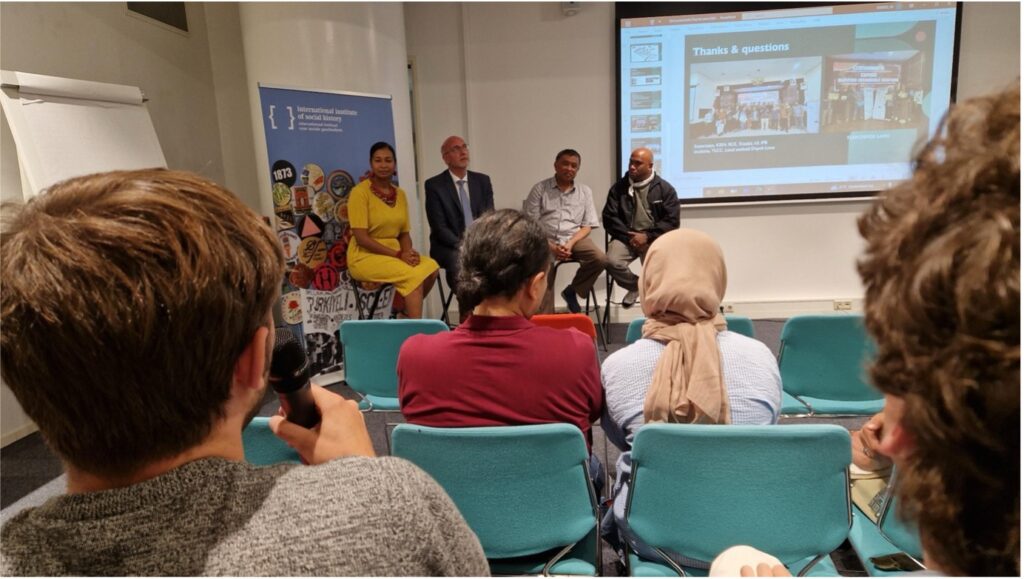
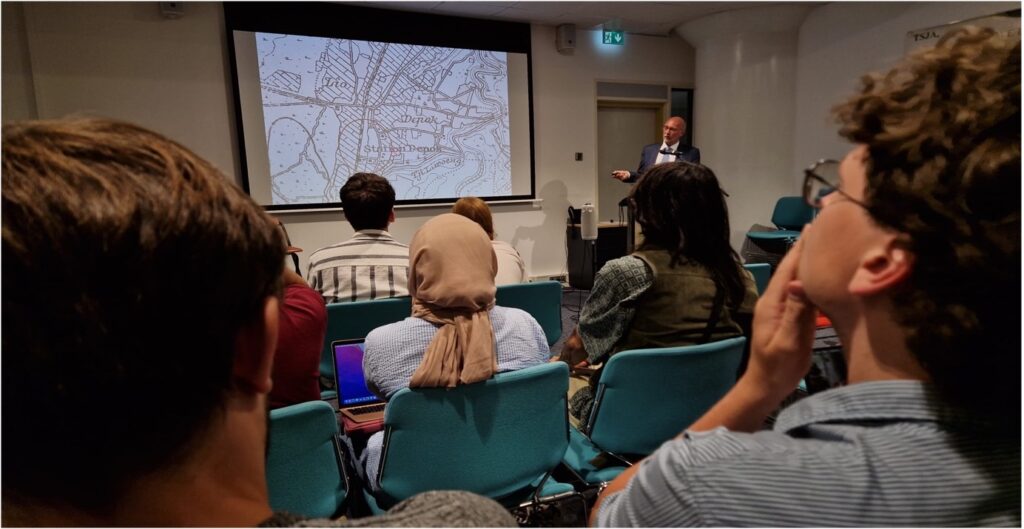
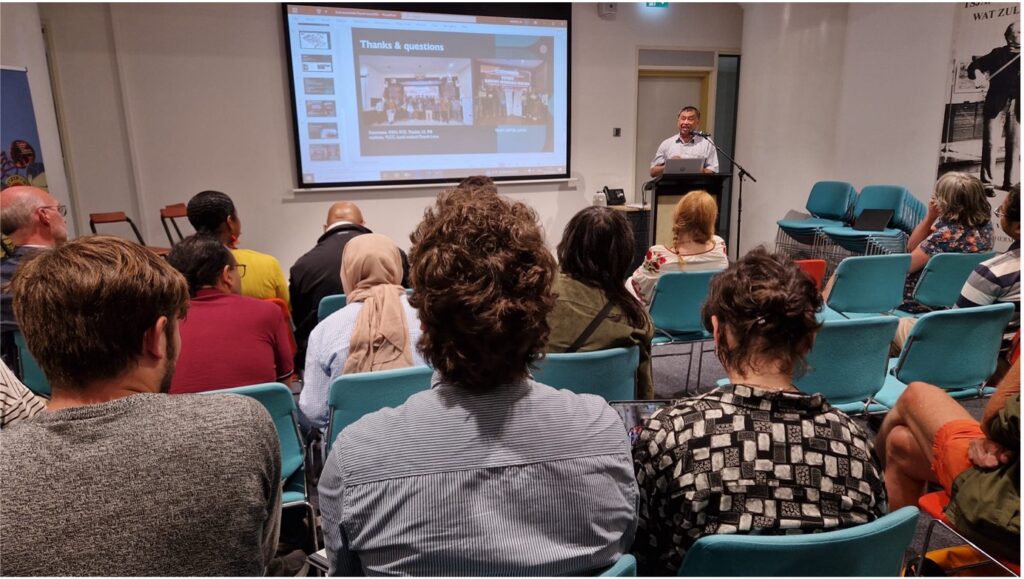
Upon Cornelis Chastelein’s death in 1714, the 200 individuals who had lived their lives in slavery on the pepper plantation of Depok (West Java) begot their freedom, as well as collective control over the land. This exceptional and relatively unknown story of humanism, slavery, and landownership was the topic of the seminar Depok: A Story of (Im)material Heritage of Slavery, which took place at the IISH on the 22nd of July 2025. Four enthusiastic speakers explored different aspects of this history, each drawing on their expertise. Jan-Karel Kwisthout, himself a descendant of one of the freed enslaved families, presented a comprehensive historical narrative of the town of Depok, located about 35 kilometres south of Jakarta. He introduced us to the figure of Chastelein whose humanist vision formed a set of Christian social rules that the now-free individuals in Depok were to adhere to for them to be allegeable for a claim to the land. Kwisthout elaborated on the place of origins of the enslaved people, such as Bali, Bengal, Makassar, Surabaya, and the Coromandel Coast, and the opposition they faced from the Dutch East India Company (VOC) that was unsurprisingly unsympathetic towards their land claims. But he also propelled this history into the 19th, 20th and 21st centuries by sketching the life trajectories of the Depok Lama community through the imperialistic times characterized by missionary activity and World War II, to today’s urbanization.
Thereafter, Sherlien Sanches and Lukas Eleuwarin from the Dutch Centre for Intangible Cultural Heritage (KIEN) focused on the heritage of Depok in contemporary times by presenting their project – a joint effort with Dutch Heritage Agency (RCE) – on intangible heritage of Depok Kota (the wider, recenty developed city) and Depok Lama (Chastelein’s plantation plots). They shared with us stories of collaboration with local students and inhabitants, and the oral histories that still circulate within the communities living in Depok. Wrapping up the event, we were honoured to have Prof. Dr. Bambang Purwanto (Gadjah Mada University, Yogjakarta) reflect on the presentations and the significance of Depok in a larger story of slavery in the Atlantic and the Indonesian Archipelago. The story of Depok, he insisted, is not just obscured in a story of Transatlantic slavery nor in Dutch memory; it is vital for the Indonesian history of slavery to incorporate the exceptional story of Depok as well.
All in all, the importance of storytelling is one of the main take-aways of the event. Storytelling is one of our best chances to make silenced histories be heard again, whether they pertain to the unfolding of a history anchored in personal or collaborative communal heritage and memory-making, or nationalistic or academic discourses. We sincerely hope that this event has contributed to this storytelling by providing a platform for the oral history of Depok to be told, shared, and amplified.
Blog
Blog | Vitória Dias: A Good Christian? July 8, 2025
Philipp Huber, PhD Researcher, International Institute of Social History, Amsterdam //
On 30 December 1607, the Lisbon Inquisition questioned Vitória Dias. It had already questioned many others about her. Vitória was part of the merchant Henrique Dias de Milão’s household. This household consisted of “New Christians”, former Jews converted to Christianity but often suspected of secretly remaining Jews. The inquisition’s suspicions were first raised after members of the household had tried to board a ship bound for Northern Europe. Now, they questioned the members of the household, hoping that they would testify against each other. Their goal was to find people who, even after having publicly converted to Christianity continued to practice Judaism in secret.
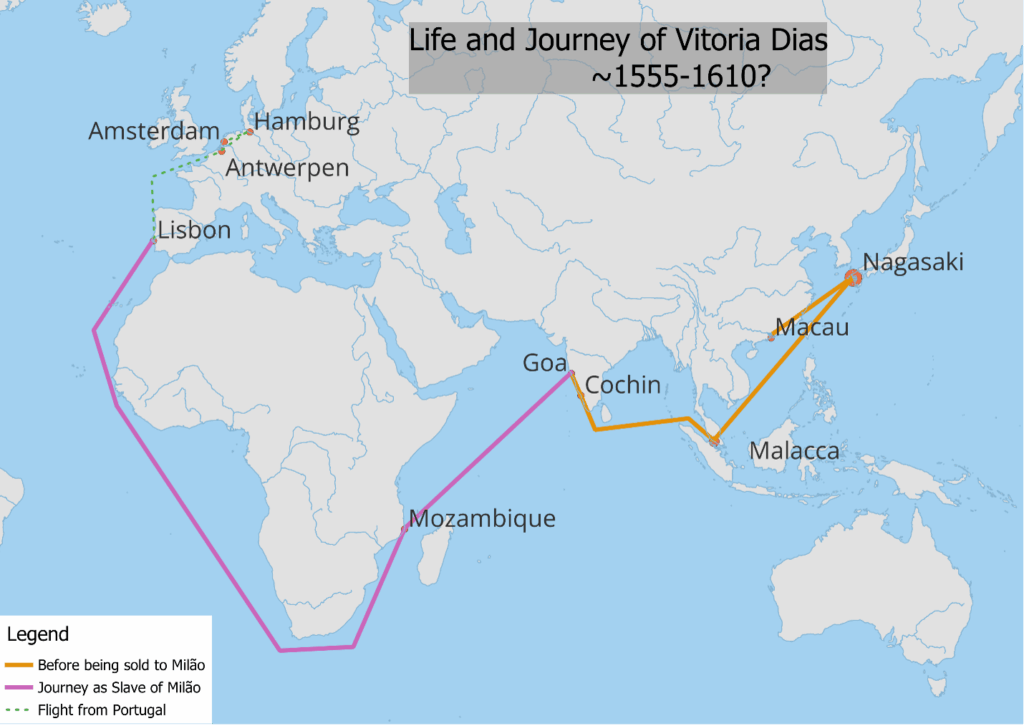
At the beginning of her interrogation, Vitória was asked to provide a brief life history. Her statement reveals that she was different from the other members of this large household in one key respect. While most were relatives of Henrique, Vitória had become part of the household as an enslaved woman, owned by him. Although she had been freed a few years prior, the inquisition still referred to her as a slave. She was not originally from Lisbon, indeed she did not know where she had been born. Vitória estimated her age at above 50, meaning that she was likely born around 1555. She said that she was from China, but did not know in which “realm”(reino) or city she was born. She had been so young at the time of her enslavement, that she did not even remember her parents’ names. Importantly, especially from her interrogators’ religious point of view, Vitória remembered that she had received a Christian baptism on a ship close to Japan. She was later taken to Cochin (Kochi) in India where she was sold to a woman named de Meneses. From Cochin she was taken to Goa, the capital of the Portuguese Empire in Asia, where she was sold to de Milão. She also claimed to have received her Confirmation from the bishop of Goa. When de Milão returned to Lisbon, he took Vitória with him. She had been living with him ever since.
After the inquisitors had written down Vitória’s statement, she was returned to her cell. She stayed there and was questioned thrice more, until on 8 May 1608 she finally confessed to knowing of the presence of Jews in the de Milão household. Later she also revealed that she had been converted to Judaism by Guiomar Gomes, Henrique’s wife, and that she had participated in Jewish rituals together with the others. Vitória was sentenced to re-education as a good Christian in a religious school. In 1610, Vitória was again in front of the inquisitors She had again tried to flee the country together with Isabel Henriques, the daughter of Guiomar Gomes. For the inquisitors, the most important facts of this interrogation were likely, again, Vitória’s insistence that she had been baptised and, moreover, that she had received Confirmation and knew the most important Catholic prayers (Lord’s Prayer, Ave Maria) as well as the fact that she had received communion while in Lisbon.
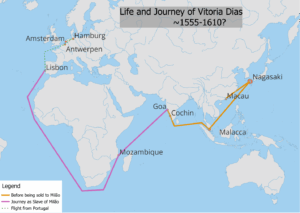
Map of the life and journey of Vitoria Dias from around 1555 to 1610
To our modern eyes, her travels appear more noteworthy. They reveal that because of her enslavement Vitória had travelled the breadth of the Portuguese world. Her testimony allows us to trace her life which consisted of stays in different cities, punctuated by transport over sea, including during her attempted flights to Northern Europe (see map). At the same time, Vitória must have had an intimate relation with the de Milão household, as they had taken the risk of revealing their religion to her and had taken her into the faith. Much trust must have been placed in her, as she was freed and given the responsibility of attempting to bring the household’s daughters out of Portugal.
Vitória “speaks” to us through the documents, yet most of what she could have said is silenced, because the inquisition was only interested in very specific information. The inquisition wanted to prove that there were practising Jews in the de Milão household. Thus, its questions focused on the making of Matzah (unleavened bread) and Vitória’s knowledge of Jewish laws. Vitória meanwhile tried to prove that she “was a very good Christian, and never acted against the faith”. In short, few real details about Vitória’s life are revealed in the more than 60 pages of the statements about her. In both investigations, the inquisitors not only wrote for the illiterate Vitória, they also partially dictated what she said as their questions restricted the topics of the interrogation. Inquisitorial interrogations do record the words of the witnesses. But at the same time, witnesses’ words were constrained by the narrow interests of interrogators.
We, as historians, want to know so much about Vitória’s life before the closing days of 1607, but we are left to imagine its specifics. Vitória remembered little enough. Her interrogators cared even less. At the close of her testimony, Vitória was given as second sentence for re-education. This time, however, she and Isabel Gomes, likely managed to flee the country to join members of their household first in Antwerp, then in Hamburg, and then Amsterdam.
Blog
Blog | Helena’s trial for freedom May 15, 2025
Britt van Duijvenvoorde, PhD Researcher, International Institute of Social History, Amsterdam //
I can hardly imagine how Helena felt when she heard that “the signatories put more credence in the words […] of a council [raad] than of the girl Helena and her testimony”—though I suspect she saw it as a profound injustice.1 These words were ushered against Helena, who was entwined in a lawsuit about her enslavement with the Dutch colonial government at Ceylon (present-day Sri Lanka) in 1790. I dedicate this first blog of our Voices blog series to Helena, whose story exemplifies how the words of enslaved individuals were discredited by colonial officials. Yet at the same time, it stands as a testament to the irrepressibility of their sounding.
Source: National Archives, 1.04.02, 3893, 549: “meerder geloof defereeren aan de woorden of betuijging eener kollesie dan aan die van de meid Helena en haere getuijgens.”
Helena lived in the city of Colombo, on the island of Ceylon. At that time, Ceylon was a Dutch colony. The territory over which the Dutch East India Company (VOC) claimed sovereignty covered nearly the entire island, except, to some extent, the inland kingdom of Kandy. This sovereignty claim, importantly, involved the enforcement of law. Still, Dutch colonial justice system at Ceylon was inherently multicultural in nature; it included local and indigenous legal traditions, such as in the adaptation of the local Tamil laws of Malabarian people, called the Thesewalanai. One important element of Dutch colonial law was the regulation of enslaveability—or, who could be enslaved, through which means, and under what conditions? By regulating enslaveability, the VOC justice system attempted to control people’s free and slave status. Yet, the regulation of enslaveability through law at times also enabled enslaved individuals to make use of colonial law to their own benefit. And this is where Helena enters the story.
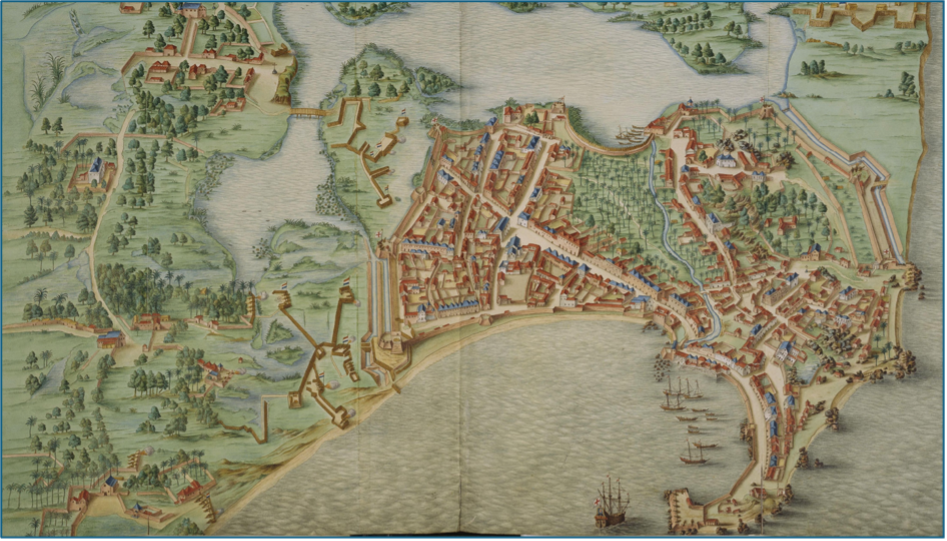
Source: Bird’s eye view of Colombo. National Archives, The Hague, inv. nr. VELH0619.115.
In 1790, Helena filed a petition to the secretary of police regarding her enslaveability. After her supposed owner, Matthijs Gomes, had died, Helena found out that the estate masters of Ceylon had requested the issuing of her slave letter—a so-called ola, or a written proof of one’s slave status. As proofs of enslavement, slave letters were crucial in controlling enslaved individuals. Without a slave letter, ownership of the respective individual was deemed illegal from VOC perspective. Sometimes when a slave letter had disappeared, the Court could allow new slave letters to be issued. Yet, for this, the Court needed to be certain – and thus, investigate – whether the individual was, according to VOC legal standards, enslaved. This also happened in Helena’s case.
In her petition, Helena did two things. Firstly, she filed a petition stating the reasons why she was “a free woman” and, secondly, she presented witnesses who testified this on her behalf. Helena stated that she and her mother Susanna had indeed worked for Matthijs Gomes “for a living and clothing, as they were very poor people”.2 The Court’s testimony also discussed Helena’s mother and grandmother, but for another reason. Dutch-Roman law held that slave status was inherited from mother to child. References to the fact that Helena was born “in the obedience [gehoorzaamheid] and out of the woman [meijd] Susanna who belonged as possession to chitti [merchant caste] Matthijas Gomes” were meant, clearly, to tie her down through her ancestry.3 From the Council’s summary, we furthermore learn that Helena had a daughter. We may very well wonder if this was this not only Helena’s fight for freedom but also on the behalf of her daughter, whose freedom depended on Helena’s.
Helena was facing an army of colonial documents and witnesses brought forward by the estate masters to prove her enslaveability. During this first trial, the Court claimed to have “complete belief” in the truth of the provided documents and asserted that “the signatories put more credence in the words or testimony of a council than of the girl Helena and her testimony.” With her credibility diminished at the outset and little opportunity to make her case, the Court declared Helena to be a slave.
Nevertheless, it did not end here. Helena continued the legal fight for her freedom through an appeal. And this time, she found an unexpected ally in the legal officials that took over the case. These officials deemed the previous ruling unfair and overturned the verdict; after all, Helena’s slave status had been illegally settled “without interrogating the girl Helena or giving her the opportunity to explain herself in relation to the testimony of her opponent”.4
Though Helena’s case continued, I have not been able to retrace her steps any further. I cannot retell her interrogation, but what I can say is the following. Stories like Helena’s are important because they show us a lot about how credibility is constructed. Which stories were deemed believable in colonial contexts is often shaped through the powers of documents and bureaucracy, and focusses on a specific group of European, upper-class men. Helena shows that these stories could be and were, in fact, often contested and therefore less powerful than they seemed.
Helena’s story does not end here. She leaves us with ethical questions regarding archival and historical study such as How do we give credence to stories discredited in the very documents that narrate them? By what means did enslaved individuals undermine the stories told about them? And which stories did they tell in return?
NA, 1.04.02, 3893, 548: “voor hunne kost en kleederen, wijl zij zeer arme lieden geweest zijn.” ↩︎
NA, 1.04.02, 3893, 547: “dat meerm: Helena onder de gehoorzaamheid en uit de den Chittij Matthijs Gomes in eijgendom toebehoorende meid Susanna gebooren is.” ↩︎
NA, 1.04.02, 3893, 550: “zonder de meijd Helena gehoord of aan haer gelegentheid gegeven te hebben om zig over de getuijgens van haere parthij te kunnen verklaeren.” ↩︎