Blog | Between the law and the household: what we do and (especially) do not know about domestic authority April 29, 2026
Stijn van Beek, student at Radboud University and former intern at IISH //
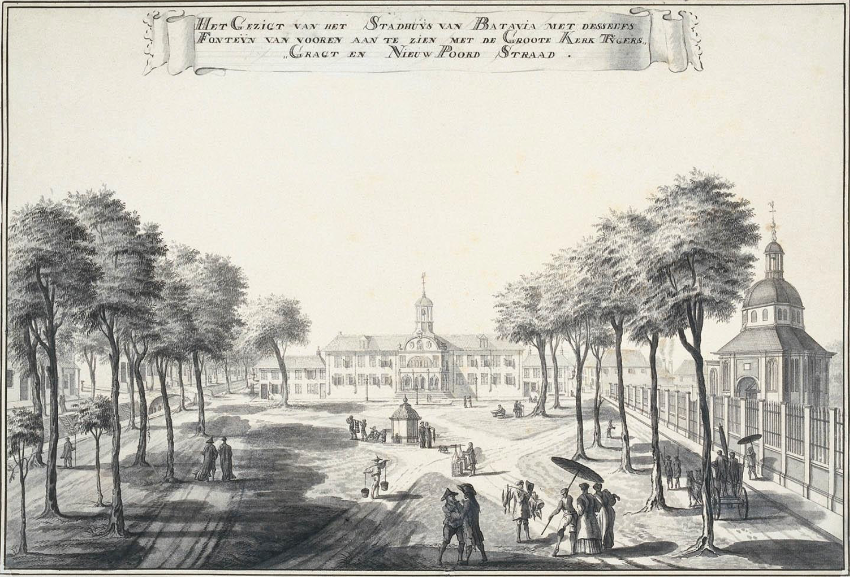
View of the city hall of Batavia and the Grote Kerk, Johannes Rach (date unknown). Source: Atlas of Mutual Heritage
In 1790, Dul, an enslaved man owned by Johan Godfried Deebler, stood trial before the Schepenbank (Magistrate’s Court) of Batavia—a statutory body that convened in the City Hall. He was suspected of domestic theft from his master, the soldier Johannes Schmidt, to whom he was leased. This was a serious affair: domestic theft of this kind was dealt with severely. In this case, Dul was accused of unjustly taking a writing pad, which he allegedly sold to a Chinese man and pocketed the profits himself. He was found guilty by the Magistrates’ Court and received multiple punishments for this petty theft. Firstly, Dul was sentenced to public flogging, whereafter he had to return to his master, who was free to punish him further at his own desire.1 This latter form of punishment is an example of domestic authority: the ability of a pater familias (head of household) to act as the highest authority in his own household.
Households were an important political entity in early modern colonial empires. They helped colonial authorities, in this instance the Dutch East India Company (VOC), to regulate and control territories. In these households, domestic authority was an important method of operating and controlling the household. By guaranteeing the sovereignty of a pater familias, it also became easier for authorities to establish, negotiate and regulate the colonial territory.2
Even though domestic authority was an important political tool in the early modern period, historical knowledge of the different workings and manifestations of colonial domestic authority is still very limited. Court cases, such as that of Dul, offer opportunities to expand this knowledge. In these court cases, references were often made to the authority within a household. However, because court cases lie at the intersection of legal history and social history, it is a source that has been used only sparingly in general and to research domestic authority specifically.3 Own research using court cases from the Schepenbank shows that Dul’s punishment is not exceptional but occurs much more frequently. In similar cases, where an enslaved person was suspected of theft, it was almost customary for the Schepenbank to encourage the owner to impose an extra domestic punishment, by stating this in the court case. In this, we see the porosity of distinctions between private and public life and authority; even though the authority of a pater familias was domestic and private in nature, a public body such as the Schepenbank could still command the exercise of such domestic authority.
Another type of source that facilitates research into domestic authority are the Plakkaatboeken of Batavia: laws and regulations sometimes directly referred to the concept of “domesticity.” More commonly, however, domesticity was addressed indirectly via conceptions related to, amongst others, the household, (nuclear) family, and authority over enslaved individuals, children, and women. These sources again reveal how public bodies related to the VOC could enforce the imposition of domestic punishment. An example of this is when someone polluted the canal but was unable to pay the fine themselves.4 Even more striking is the legislator’s use of domestic authority, for instance, when the bailiff was allowed to impose ‘domestic’ penalties in some cases.5
Let us return to Dul now that we have a better understanding of the institutionalized practices of domestic authority. What the punishment and regulation of enslaved individuals brings into view are the contesting as well as mutually reinforcing claims of authority over enslaved and otherwise subjected individuals living in VOC territory. Yet, even though I demonstrated the commonality of such domestic punishments in this blog, we still know little about what happened after the verdict. Did Dul in fact receive a domestic punishment and, if so, what kind? How many of these acts of thievery did not end up in court? Were such acts dealt with under domestic authority? And where did private authority end and public authority start?
NA, Schepenbank, inv. no. 11974, f.364-377, report of the trial against Dul (1790). ↩︎
T. McGregor, L. Benton, ‘A Sea of Households: Ordering Violence and Mobility in the Inter-Imperial Caribbean’, Past and Present (2024) 22-24; M. Muravyeva, ‘A King in his own Household: Domestic Discipline and Family Violence in Early Modern Europe Reconsidered’, The History of the Family 18:3 (2013) 230. ↩︎
K. Ward, Networks of Empire: Forced Migration in the Dutch East Indian Company (Cambridge 2008) 87. ↩︎
J.A. Chijs, Nederlandsch-Indisch plakkaatboek, Tiende Boek 918. ↩︎
Chijs, Nederlandsch-Indisch plakkaatboek, Seventeenth Book 43, 371. ↩︎
Report | From acts of resistance and feminist theory to tortoiseshell trade and 17th-century currency – (not) everything I learnt at the GLOBALISE conference April 24, 2026
Lina de Swaaf, Intern, Project management & user interaction, Globalise //
Digital archives open up histories in an unprecedented way; however, they also come with a series of complex questions and difficulties, both for archival institutions and users. Digital colonial archives have another dimension of complexity to them, as they both allow one to shed light on underdocumented societies, but also pose a complex risk of giving in to the perspective and bias from the authors of the archives, namely the colonisers. To open up discussions about the further unlocking of colonial archives and present the possibilities of digitalisation along the lines of the GLOBALISE project, we hosted the conference Colonial Pasts, New Approaches and Historiographical Futures from 3 to 6 March. As someone who has been working with GLOBALISE for the past few months, but who, before that, was quite unfamiliar with colonial history or archival research, I will share some of my personal highlights and findings here.
The GLOBALISE project leader, Matthias van Rossum, Senior Researcher at the International Institute of Social History (IISH), kicked off the keynote lectures with his lecture titled Resisting Empire! Reflections on colonialism, historiography and digital infrastructure. He touched upon four key topics: how GLOBALISE can be a game changer in social history research, how its infrastructure can unveil long forgotten lives and stories, why the history of both resistance and the resisters themselves is important, and finally, what GLOBALISE can mean for historical research. He illustrated these important questions with the case study of a resistance movement that took place on a VOC ship, the Sara Carolina. He showed how such ships were often portrayed in rustic and aesthetically pleasing imagery. However, this hides the dehumanising conditions of the slave ships, erasing the history and memory of those entrapped there. Matthias told the story of how the slaves on the Sara Carolina rose and resisted, fighting back against their oppressors. Whilst listening to the lecture, I could envision the enslaved peoples’ fight, not just from the VOC point of view, who are the ones who actually wrote about it, but also from the resisters’ perspective. The combination of different resources brought to light deeper and darker details of their situation, their motivation, and the manner in which they fought. I can only attempt to comprehend their situation, the frustration that they must have felt inside the ship, and the victorious feeling they must have had when walking on top of the Sara Carolina. However, the lecture did bring me one, or even a few steps, closer to it. Matthias also explained his and Beth Warner’s methodology, which showed the potential of what one can do with GLOBALISE. They used lexical event triggers, compiled by Stella Verkijk, to identify observations of revolt in the millions of pages of the GLOBALISE corpus, and the places dataset to identify the locations where the acts of resistance took place. They then applied a methodology developed by the Global Hub Collective Labour Action to get insight into the quality of each of the automatically collected observations. Then, as a last step towards obtaining a high-quality dataset, they manually checked the findings above a certain quality threshold.
On the following day, Ann Stoler, Willy Brandt Distinguished University Professor of Historical Studies and Anthropology at The New School for Social Research, gave her keynote lecture, On bearing Archival truths – their burdens of colonial proof. Stoler showed that colonial archives are anything but neutral. Instead, they are sites where power, knowledge, and emotion intertwine. By tracing moments of hesitation and contradiction, in other words, moments where officials judged not just what people did but also how they felt, Stoler revealed how colonial rule depended on unstable ‘regimes of truth’. Her approach challenges historians to move beyond reading archives for information and instead interrogate how truth itself was produced, contested, and enforced. This perspective opens new pathways for studying colonial history and rethinking archival research as a critical practice.
Lastly, Tonio Andrade, Professor of Chinese and Global History at Emory University, gave the last keynote lecture, The Art and Peril of Being in Between: Reflections on Cultural Brokers and the Dutch East India Company. He focused on microglobal histories, highlighting the lives of different translators and mediators, and how their roles shaped colonial interactions. One example was Osoet Pegua, a female trader and mediator who has often been portrayed as a gold-digger, sleeping her way to the top. Andrade revised this view, showing that she was a powerful merchant with many valuable connections, so well respected that even the VOC feared the repercussions they would face by obstructing her. This lecture showed how the lives of such mediators, the ones in between, were usually filled with problems and tragedies. These moments of tension frequently generated dense archival records, offering historians insights into the workings of colonial societies. And not only that. As someone specialised in gender studies, it was incredibly refreshing to see Andrade break through the patriarchal image that was painted on Osoet Pegua by the VOC, and give her the agency, respect and story she deserves. Not as a whorish gold-digger, but as an equal to any other merchant, perhaps even a superior, with her own voice.
Roundtables
We invited Dagmar Freist, Ana Sofia Ribeiro and Claude Chevaleyre to open up the discussion at our first roundtable, chaired by Guido van Meersbergen, Global Histories and the Digital Turn. They discussed the importance of awareness of bias in the colonial archives and how digitisation can affect which voices are heard and which remain hidden. Furthermore, the question of what should be done to further uncover and protect the histories of the subaltern. They came to the conclusion that the three key steps to take in the near future are collaboration between fields and communities, the correct training and education of future historians, and, most importantly, the accessibility and researchability of the archives for everyone.
For our second roundtable, Decolonizing Infrastructure, Engaging Communities, we invited Asawari Luthra, Yus Broersma, Wisaal Abrahams and Charles Jeurgens on stage. This discussion was chaired by Wim Manuhutu. Drawing on the previous roundtable, the participants further elaborated on the topic of accessibility and what opportunities the digitisation of the archives provides. Building on that, they also discussed the democratisation of archives and what that means. While professional historians are incredibly happy and excited about this turn in archival research, other audiences might not understand how to utilise the digitised materials properly, or might not know of their existence at all. Offering training in order for these audiences to develop a basic level of knowledge and understanding is key to avoiding the reproduction of colonial biases. Furthermore, the level of responsibility for archival institutions in addressing these issues proactively was discussed, with everyone concluding that archival institutions should definitely keep trying to be as transparent and intersectional as possible.
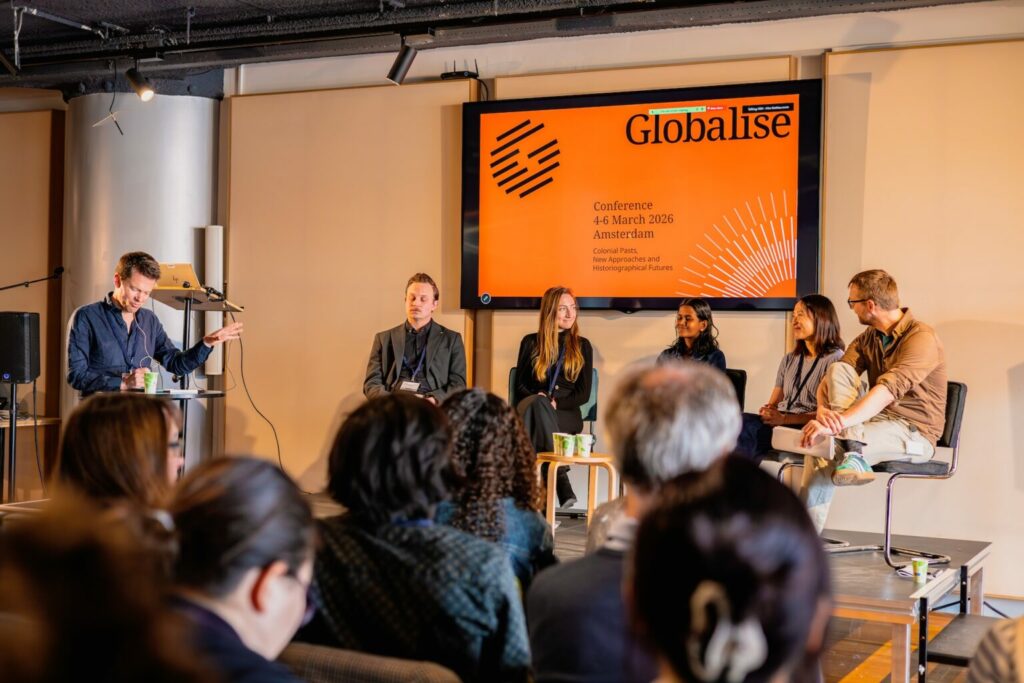
Matthias van Rossum, Lija Joseph, Anna Bruins, Wenrui Zhao and Luc Bulten came together for the final roundtable, Colonial Pasts, Empowering Futures, chaired by Lodewijk Petram. It was combined with a reflection on the conference, the GLOBALISE project, and the furthering of social history and archival research, together with the audience. The potential of projects such as GLOBALISE was discussed, together with the difficulties they bring. The many advantages of such a project were highlighted, such as new ways of researching archives and the revolutionization of archival access, as not everyone has the privilege to travel to their desired archive. On the other hand, however, there are certain dangers in this new development in archival research: people may be less tempted to dive deeper into the stories and check various sources and perspectives, as the so-called “low-hanging fruit” of information is so easily within reach. Additionally, researchers and students should not forget where the archives came from, what that means, and what the structure of an archival collection tells us. One needs to be able to give positionality to the document that they are working with.
My main takeaways from the roundtables were that, firstly, the existence of colonial bias must be remembered and fought against at all times. There are so many ways in which archives, especially digitalised archives, tempt users to go the easy way, reaching for the so-called “low-hanging fruit” or the first digital hit. That temptation is incredibly dangerous, as the lives and experiences of the subaltern are hidden beneath the coloniser’s words, and they are key to fighting against the colonial view of the world. Secondly, that collaboration is primary in ensuring a fair and accessible archive and history. Not only between academics, but between communities as a whole. Only by sharing our histories will we be able to get the complete picture of the past.
Final roundtable session at Globalise conference Photo credits: Poorvi Garag / Globalise project. Licence: CC-BY 4.0.
Panel sessions and GLOBALISE workshops
Besides our main keynotes and roundtable, we had eighteen incredibly interesting panel discussions, in which researchers shared their findings or ongoing projects, and three workshops, hosted by our team. These sessions had topics ranging from paper currency, FAIR datasets, VOC church workers and geo-visualisations of colonial infrastructure, to the patriarchy in the 17th-century VOC world, Chinese civil wars, and the arms trade through diplomatic relations.
I do not know what I expected beforehand, but some of the papers certainly blew right past that, not only in their actual findings, but also in what those findings meant. For example, Willemien de Kock and Emin Tatar’s paper on tortoise shell exploitation showed the massive dimensions of the VOC’s shell trade. But it was deeper than that: through it, they uncovered the devastating and lasting effects the company had on the maritime ecosystem. Hawksbill turtles, the ones hunted by the VOC, are still critically endangered today, and they are only one of the many examples of species (nearly) destroyed by colonial institutions. Another paper that I found incredibly interesting was Ann Heylen’s. She showed the deep-rooted patriarchal lens in which archives are not only written but also read. Her goal is to re-emerge women’s lives, voices and agency from the archival pages, fighting against the patriarchal system that still prevails. Hearing someone stand up for the 17th-century women was refreshing and gave me hope for the future of feminist voices hidden in time.
Additionally, there were three different GLOBALISE workshops. Transcriptions and Accessing the Archives, centered around the path to the GLOBALISE transcriptions, from scans to searchable text, and demonstrated several methods for using the transcriptions, even if you cannot easily read early modern Dutch. The Annotation and entity & event recognition workshop presented the work we did on recognising entities (such as persons and places) and events in the GLOBALISE transcriptions, and why the outputs of our models are helpful for historical research by showing some examples of event detection. The Historical Data and Research workshop had three variations: the Persons dataset, the Weights & Measures dataset, and the Places dataset. Lastly, we hosted the Outsmarting the machine: critically evaluating automatic data enrichments in text workshop. In it, the inner workings of language technology based on deep neural networks were introduced, and then participants were invited to evaluate a sample of our event detection model’s output.
Performance lectures
Lastly, I attended two of our performance lectures, which showed different ways of approaching archival research and opened our eyes to the countless ways in which history can be explored. Carmen Draxler, a visual researcher and designer, presented her project »Mother-of-Oil«, an archival research project that traces the colonial roots of the Dutch-British oil company Shell in Indonesia. By following the stories of seashells from the Indo-Pacific, the research unfolds as a relational map of archival material that reveals Shell’s entanglement with the VOC.
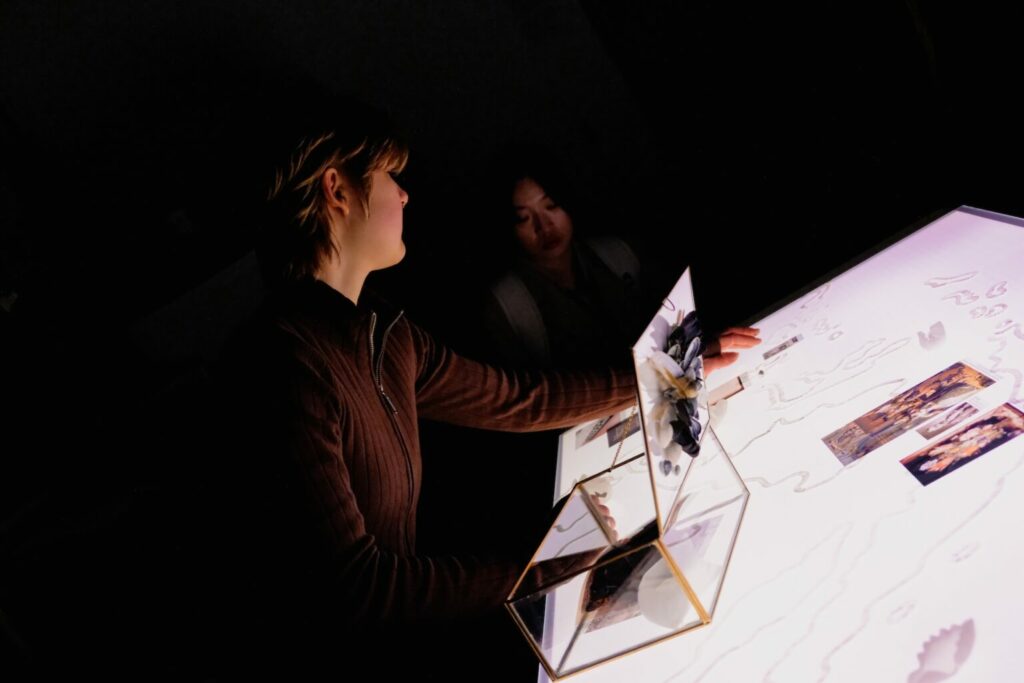
Carmen Draxler during her performance lecture »Mother-of-Oil« Image credits: Lina de Swaaf / Globalise project. Licence: CC-BY 4.0.
TogetherTogether, a group formed by Juliana C. Acero, Stefano Cattani and Rita Gaspar, performed their piece Farewell: An Imagined Response to Dutch Colonizers, a research-based performance that departs from the VOC archives. Their work is an artistic translation of their research into cultural, spiritual, and epistemic dispossession in modern-day Indonesia. They depart from the stories of tree extirpations in the Maluku Islands, and on the life of the botanist and merchant Georg Eberhard Rumphius, as an example of the Company’s attempt to dominate the spice trade, knowledge authorship, and the imposition of violent systems of abduction upon people and territories.
These two lectures provided a completely different perspective on colonial history than what we, or at least I, am accustomed to. It was very special to experience shells and trees being given a voice, highlighting the importance of non-human victims of the colonial project. It revealed a whole new dimension of suffering to me, of which we can still see the consequences today.
Closing note
We are incredibly grateful to have hosted this conference, and even more grateful to the people who attended and submitted their papers. It was only due to their research, curiosity and enthusiasm that this conference could become a success. Personally, I have learnt not only that there are unthinkable amounts of people, stories and voices one can find in the archives, but also what drives people to look for them. The passion everyone showed for their craft was inspiring, and has pushed me to reconsider what I knew about the colonial archives.
Lastly, I want to thank our team one last time, as they put in an unbelievable amount of effort into not only this conference, but the GLOBALISE project as a whole. We are excited to see what the future holds and are looking forward to the new age of research.
Originally published on the Globalise blog with the recordings of two keynotes: available here
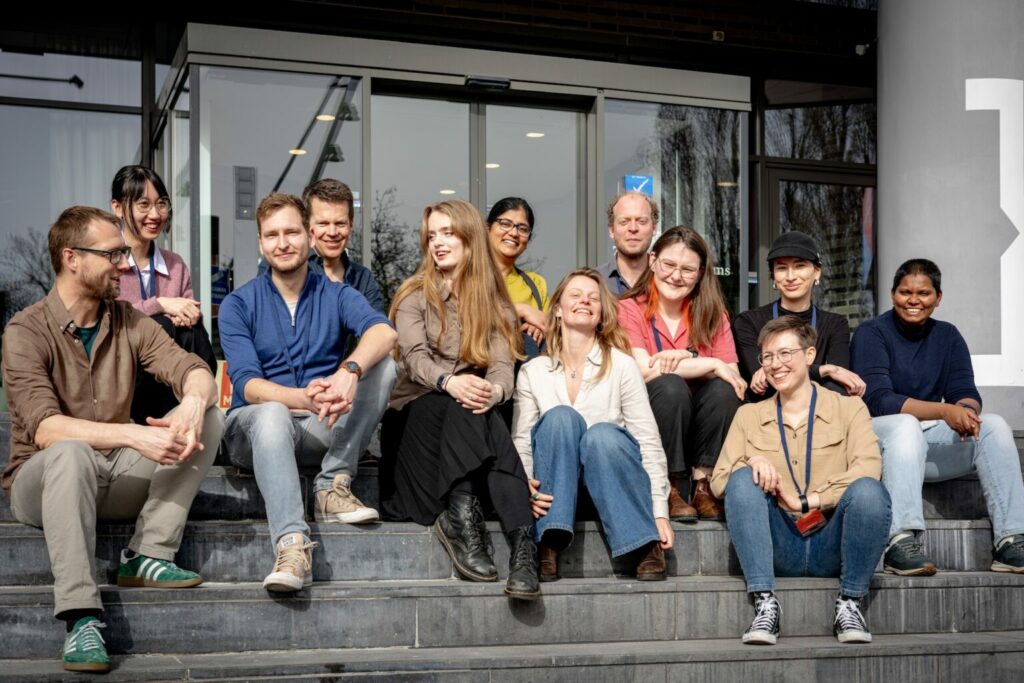
The Globalise team at the end of the conference Image credits: Poorvi Garag / Globalise project. Licence: CC-BY 4.0.
Blog | Enslavement and the papier-mâché of the colonial archive March 17, 2026
Nicholas Sy, assistant professor at the Department of History, University of the Philippines Diliman and External PhD candidate, Radboud University //
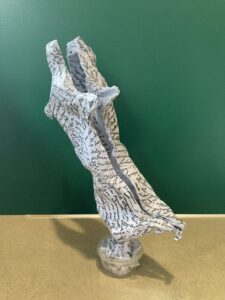
I have a stack of paper about slaves. It is as tall as my suspicion that paper entrapped them. I tried to think of a metaphor for this problem with the colonial archive and thought of a papier-mâché model. So one Christmas with my parents, I printed every deed of sale I had from the Spanish Philippine archives, soaked them in strips in a bowl of glue and water, and then sat to negotiate with my frustrations. The result was something that multiple valued mentors have gently said is too meditative for my dissertation. But it remains part of the thought process behind the arguments in my dissertation, so I thought I would share it on our project blog:
Humans, like perhaps land, are not naturally defined as property. They exist in the world by default. But the uneven relations of power present in colonialism attempted to define both land and humans with words on paper. This process was and is true for various relations of power. It was especially crucial to the relations that produced enslavement. This process involved articulating the right words “esclavo” (slave) in the right sentences “esclavo habido en buen título” (slave possessed under legitimate title). It involved writing those articulations into documents and folding those documents into rectangles, transportable from the auction block to the shipyard, farm, monastery, or home. It involved a slaveowner opening these rectangles, smoothening them, and filing them together.
One document on its own is in its way an archive, however it is in compiling documents together that the weight of similar documentation reinforced the validity of any single document. The document also derived its validity from its adoption of the words, phrasings, formulations, and seals of empire. And then these documents that defined people were filed, alongside documents defining things like land and horses. People can speak but land and horses cannot contest their nature as objects or possessions. The slaveowner’s archive presented all three, land, horses, and people together and asks us to consider their equivalence. All are objects. Implied comparibility is perhaps the glue holding the papier-mâché archive together.
Like my soaked and now drying model, these documents froze time. They are good at capturing moments of enslavement. But they are very limited in how they capture the lives they attempted to define; or how real people attempted to define themselves over the course of their lives. We as historians rarely have access to the things the colonial archive did not think it owned. It only takes a thin layer of archival paper to cover a person, narrowly fixing their definition. And from today’s vantage point, we often only see that papier-mâché layer. Its shell is rigid. It looks human. Perhaps human enough to sell. For historians, it looks human enough to analyze. And we analyze it despite knowing that it is hollow. We recite what the contracts say, and in reciting them make them real in our repetition.
Report | Rethinking Horizons for Histories of Slavery in Asia: ESTA Data Launch & Documentary Screening Slave Island January 16, 2026
Britt van Duijvenvoorde, PhD Researcher, International Institute of Social History, Amsterdam //
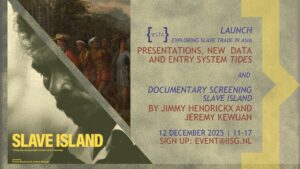
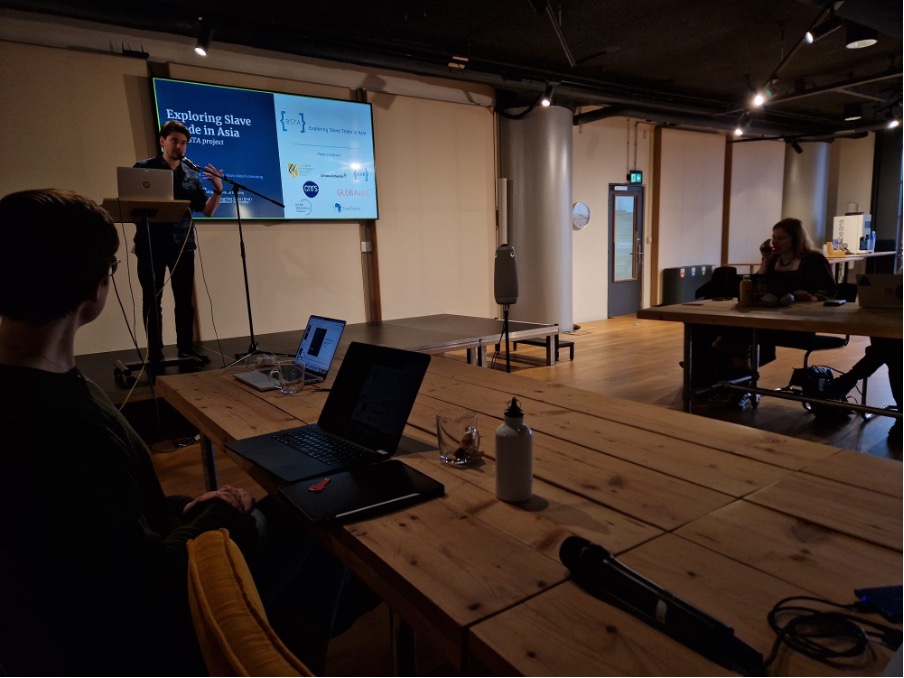
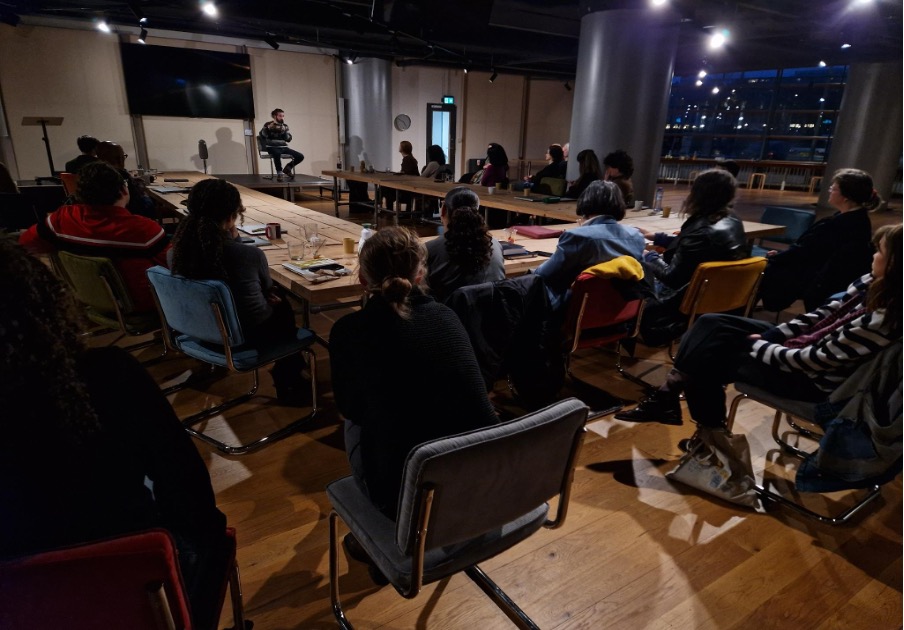
Slave trade in Asia is slowly gaining more attention in academic and public spaces. The Exploring Slave Trade in Asia (ESTA) Database has, unquestionably, greatly contributed to increased awareness about the history of slavery in the wider Indian Ocean World both in the Netherlands as well as internationally. Since its launch in December 2023, the ESTA Database has significantly expanded in scope. Efforts by the ESTA team, collaborating projects at the International Institute of Social History (IISH), and international partners have made a new data publication possible. To celebrate the amazing collective effort, Pascal Konings (IISH) and myself, Britt van Duijvenvoorde (IISH), organized the symposium “Rethinking Horizons for Histories of Slavery in Asia” on December 12, 2025, at the IISH. The objectives of this event were twofold. On the one hand, it occasioned the second data launch of the ESTA Database and its data entry system TIDES. On the other, it provided a space to critically examine early modern slave trade in Asia and its enduring legacies in contemporary forms of slavery through the documentary screening of Slave Island together with filmmaker Jimmy Hendrickx.
The launch of the new ESTA data and entry system was accompanied by several presentations from researchers that are related to ESTA or the field of Indian Ocean slavery. Past and future data contributions to the ESTA Database were presented by Miguel Rodrigues (IISH), on the Iberian slave trade in Asia, and by myself, on the Dutch East India Company in the Bay of Bengal. Student assistants Milan Francis and Femke Brink introduced the audience to TIDES, ESTA’s novel data entry system, and presented an incredibly detailed story of a Dutch slave trade vessel which was hijacked by the Danish along the East Coast of India. Concluding the ESTA-related presentations, Bethany Warner shared the recent HTR developments at the IISH, which involves both the transcription of Dutch colonial archives as well as the construction of new HTR models for other languages. These presentations were followed by Kathleen Burke, who introduced her recent work on colonial kitchens and other places of food provision as spaces of oppression and resistance.
Pascal Konings presents the new ESTA Database
After a lunch intermezzo, ESTA coordinator Pascal Konings (IISH) officially launched the new version of the ESTA Database. In this upgraded version, the Database contains 5,292 voyages and 9,155 subvoyages and lays bare previously unrecorded slave trading patterns from newly added regions such as China, Southeast India, and Mozambique, with an increased chronological coverage into the twentieth century. In total, the ESTA Database currently contains explicit references to at least 440,000–448,000 forcedly and violently displaced enslaved people. In addition to a new version of the Database, Pascal Konings introduced the data entry system TIDES. This entry system allows users to contribute data on slave trade voyages while retaining full data ownership, and to annotate existing ESTA voyages. It was a really worthwhile experience to have worked with the ESTA team and to have colleagues like Jennifer Gaynor and Hideaki Suzuki share their reflections (and dreams!) on slave trade data, databases, and the creation of digital infrastructures.
Histories of slavery are seldom connected to modern day forms of slavery. Even though contemporary labor and sexual exploitation are organized in structurally comparable ways to early modern slavery, historians all too often refrain from engaging with contemporary constructions of labor exploitation. This reverberates in the public domain, where ‘surprise’ is the main sentiment expressed when people are faced with the existence of modern slavery. To address and rethink academic and public understandings of the historicity of slavery, the second part of the event shifted focus to the present through a screening of Slave Island. This documentary follows the activist Jeremy Kewuan in his quest to eradicate modern day human trafficking on Sumba. The documentary forms a testimony to the individuals who still suffer under conditions of modern slavery whilst tracing their current-day experiences back to their colonial roots. On a more personal note, this documentary touched me incredibly in revealing the extremes of both human empathy and apathy. I am incredibly grateful that filmmaker Jimmy Hendrickx could be present during the event to discuss the documentary and the larger implications of both his movie and the realities of forced labor it depicts. In the discussion that followed, we talked about the intersections between local slavery on Sumba and commercial slave trade, both past and present, as well as topics such as gender roles in enslavement and the movie’s reception in Indonesia.
Interview with filmmaker Jimmy Hendrickx
ESTA and Slave Island are projects that emerged, on the one hand, from living in the afterlife of oppression where the lives of millions of people worldwide are still marked by exploitation, and, on the other, a shared felt urgency to redress these historical and contemporary forms of violence via the dissemination of knowledge of untold histories and modern realities. Putting these two projects in dialogue with each other is, of course, not enough to fight modern day slavery—but it is one step forward in raising awareness that this fight is still to be fought.
Report | The Posthumus ESTER Conference December 17, 2025
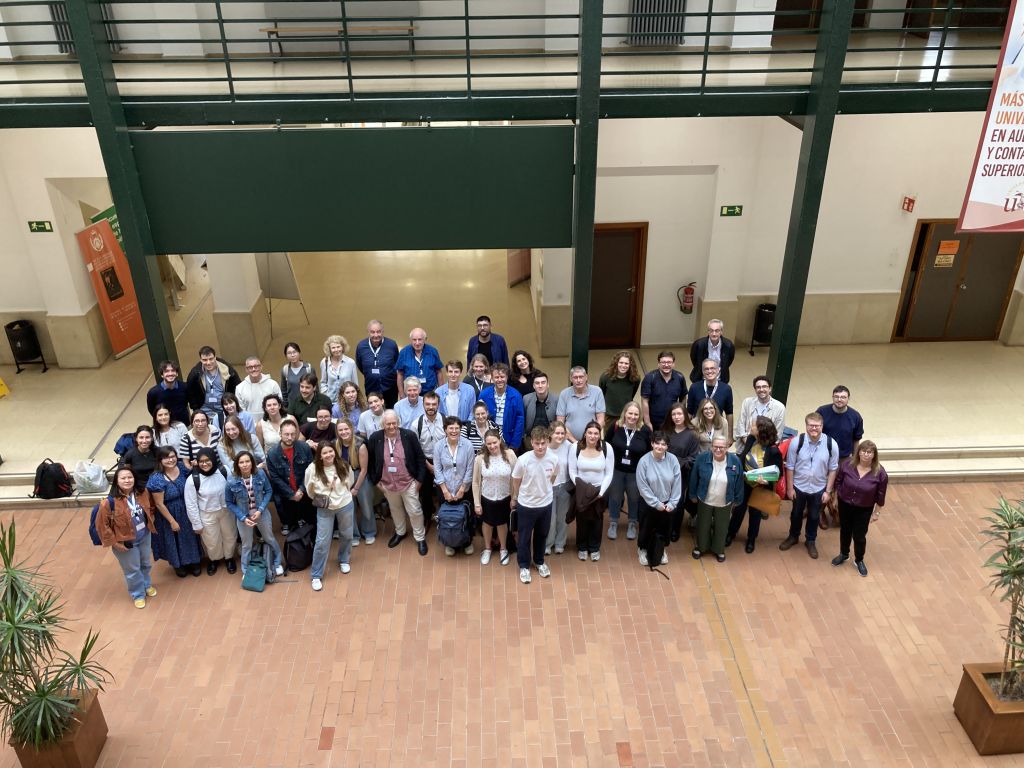
The Posthumus ESTER RDC 2025 held in the University of Seville, Spain, between the 3rd and the 5th of November. As members of the Posthumus cohort 2023 & 2024, PhD candidates of our team participated in those intense three days.
Group photo: Posthumus ESTER RDC 2025
Aside from the Posthumus cohorts, this Research Design Course (RDC) welcomed external PhD candidates and senior researchers from different European Universities (Grenada, Évora, Lisbon, Brussel…). The participants were divided in several groups, organized thematically. Each participant had to present a paper to their group and received feedback from a fellow PhD and senior commentator before opening the floor to the public.
This allowed us to exchange about research subjects from different time-periods, with various methodological approach and themes: demographic, environmental, socio-economical history but also gender studies, colonial and post-colonial history were among the many themes of this RDC.
Main challenge here was probably… To comment on each other’s paper in spite of the gorgeous weather out there. For some of us it was their first discovery of the city of Seville. For others, it was the opportunity to visit the Archivo General de India (you can read the blog of Iliana about the archives here!). We were grateful for the city tour organized by the Posthumus and external organisation, which made us able to enjoy the late-afternoon warmth, the Plaça da España, the Cathedral and many other places of the city centre.
And what would be a Posthumus event without the fruitful meetings with researchers? I think this has been the most valuable thing of the conference. Speaking for myself, I am very grateful of all the rich discussions I had with senior researchers and fellow PhD candidates. Very happy that I have meet all these enthusiast colleagues, with very beautiful projects.